BINH THANH HOUSE
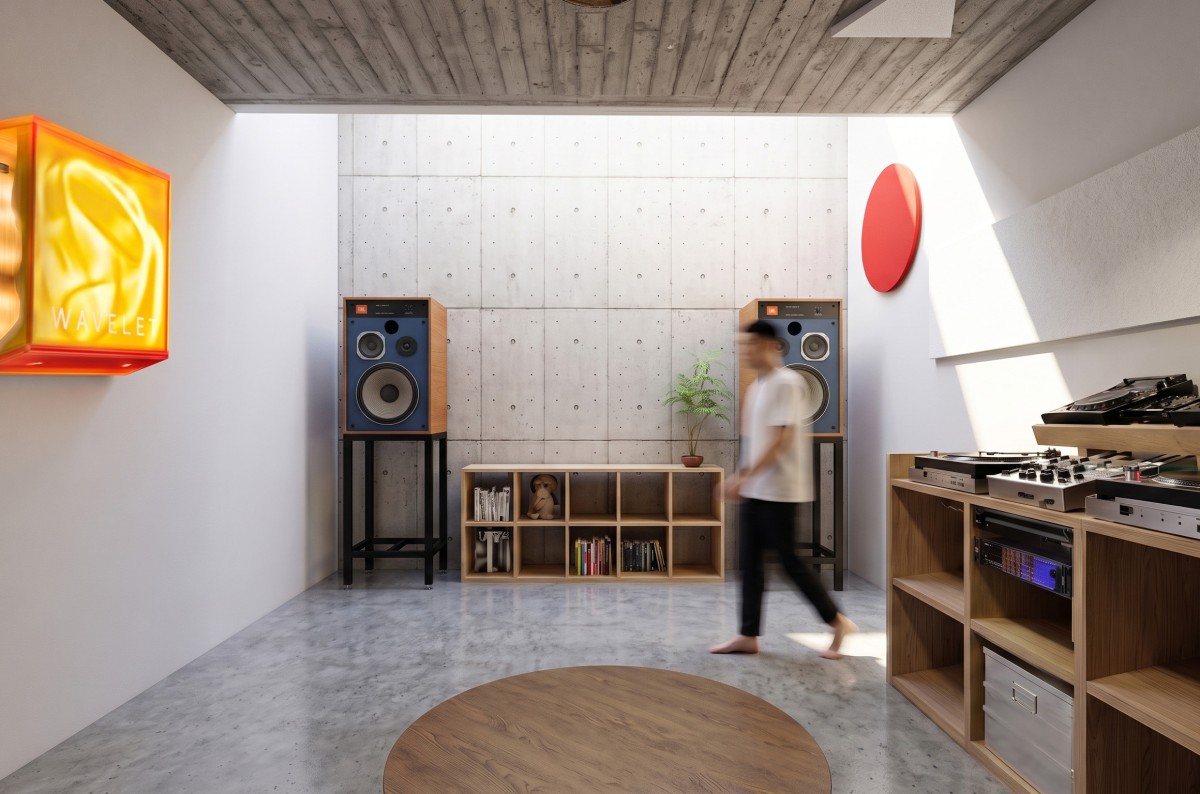
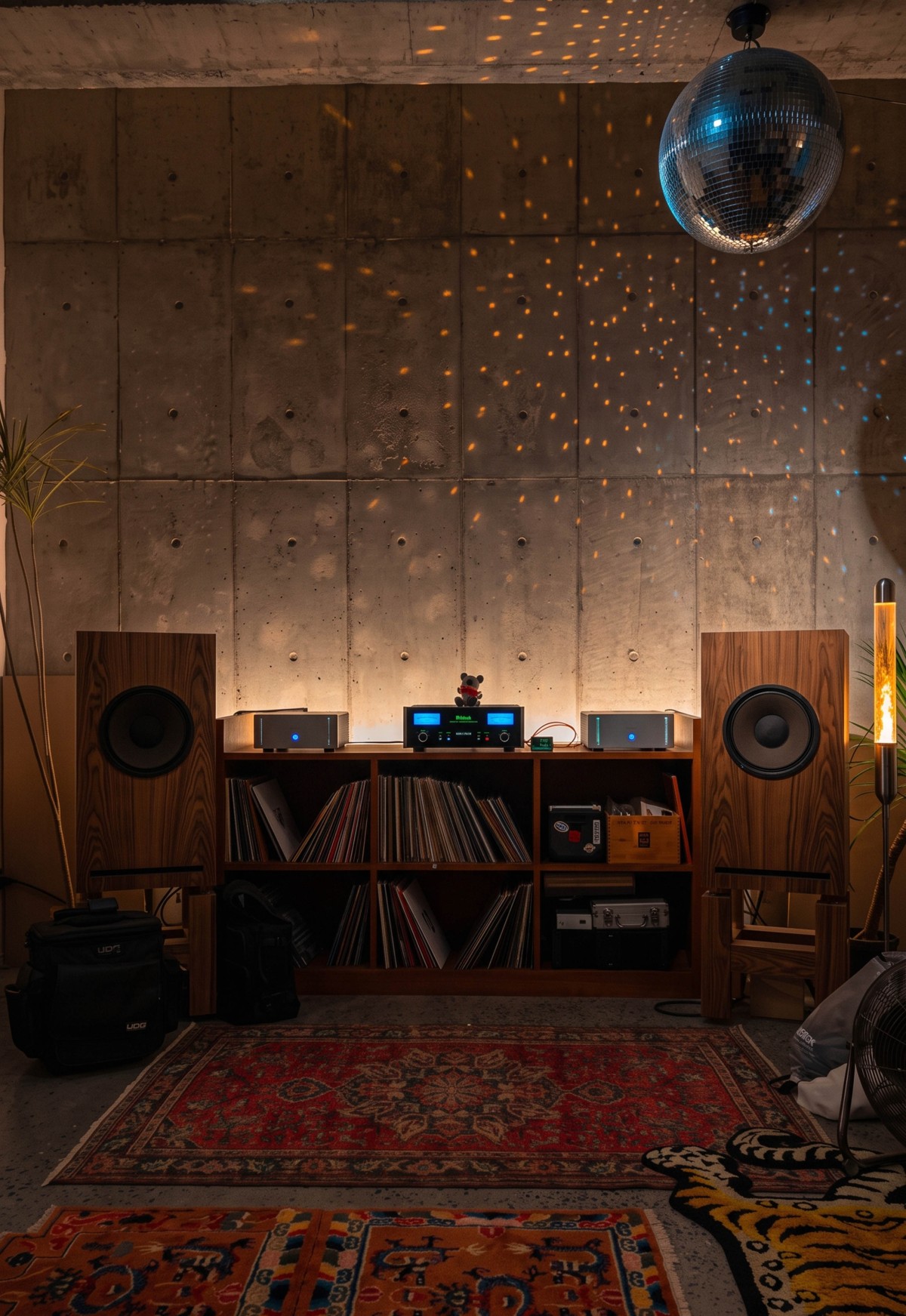
Designed for a young Vietnamese-Japanese couple, Binh Thanh Haus is shaped by the intersection of two cultures and a distinctly personal way of living. The husband is a DJ, making music not simply a hobby but an integral part of the home: a dedicated studio for creation, while the living room doubles as a miniature stage, where DJ sets can unfold naturally within everyday life.
Rather than separating functions into rigid compartments, the house is conceived as a continuous and adaptable spatial system - where living, working, listening and socialising coexist within a unified
A fluid spatiality
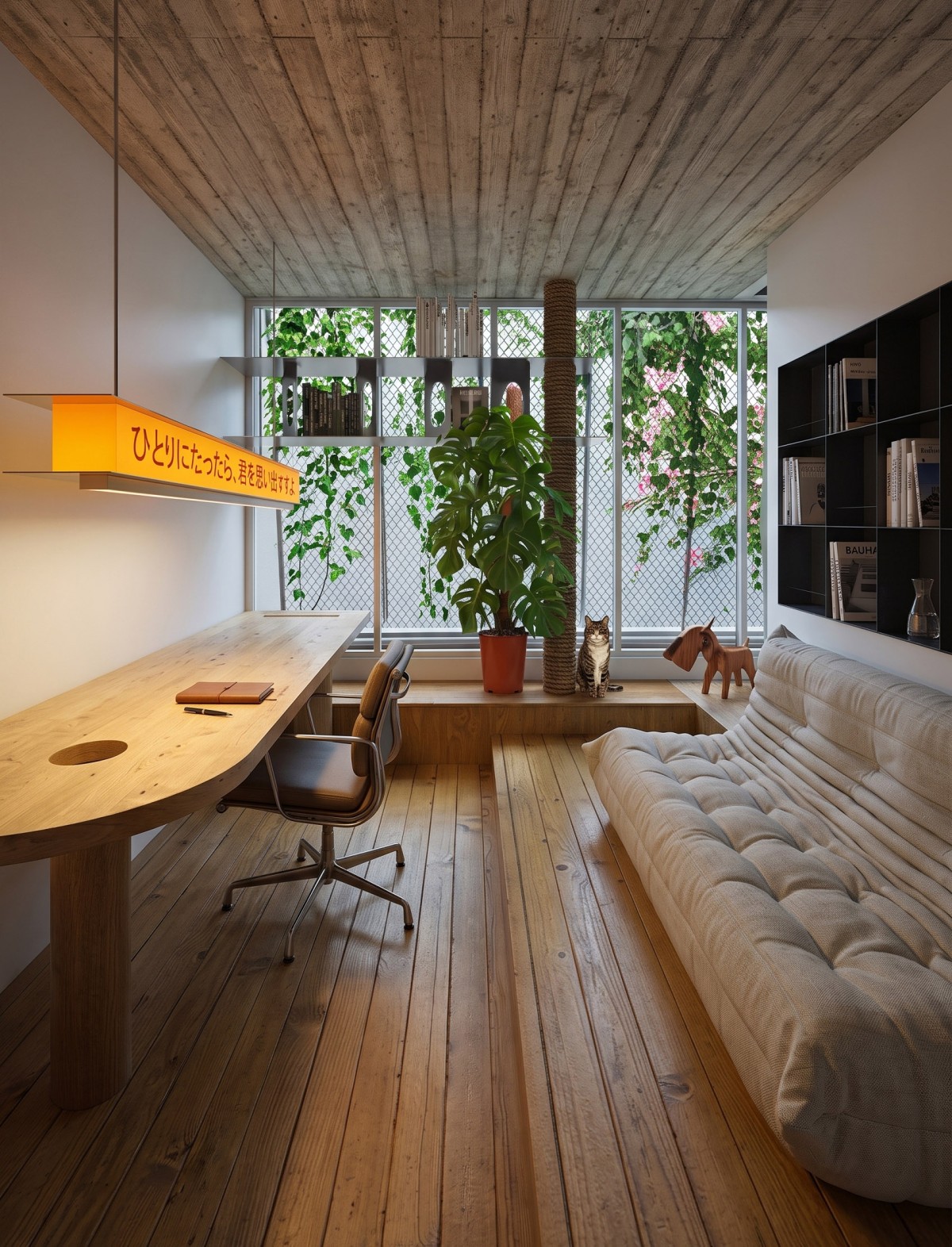
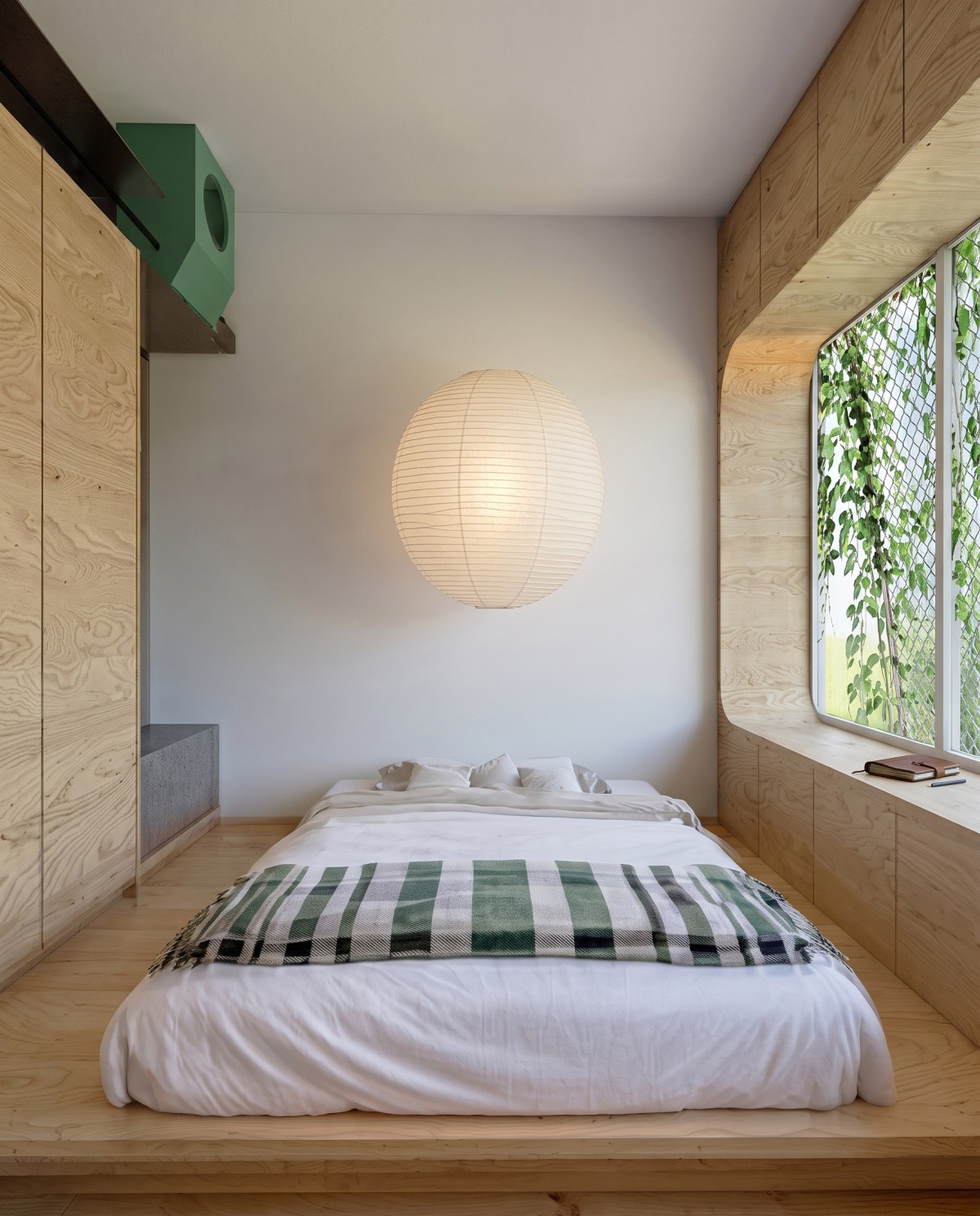
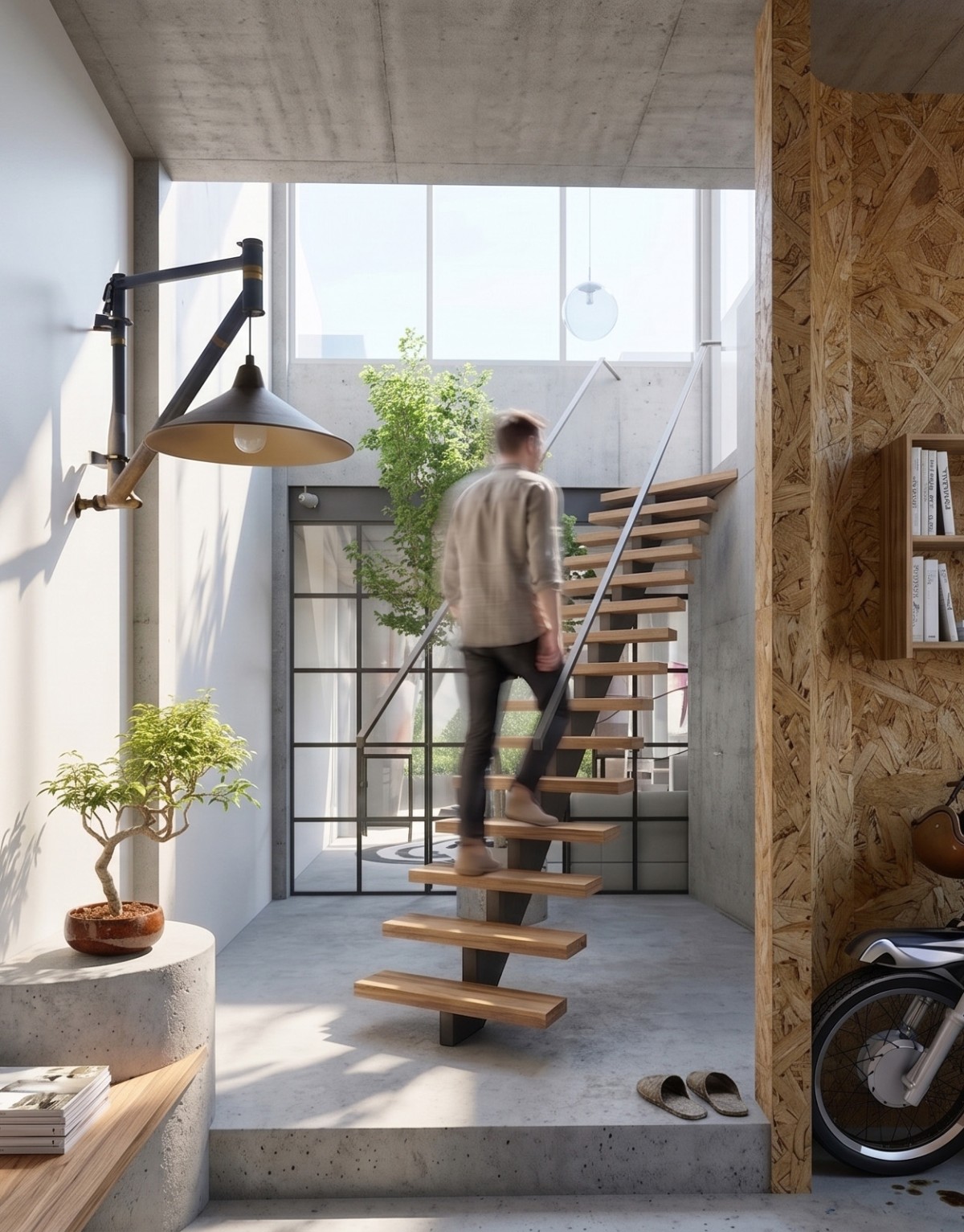
The Japanese spirit is translated into a lifestyle that is both minimal and liberated: fewer objects, more void, abundant natural light and freedom of movement. Rather than being defined as separate rooms, spaces connect and unfold as a continuous flow.
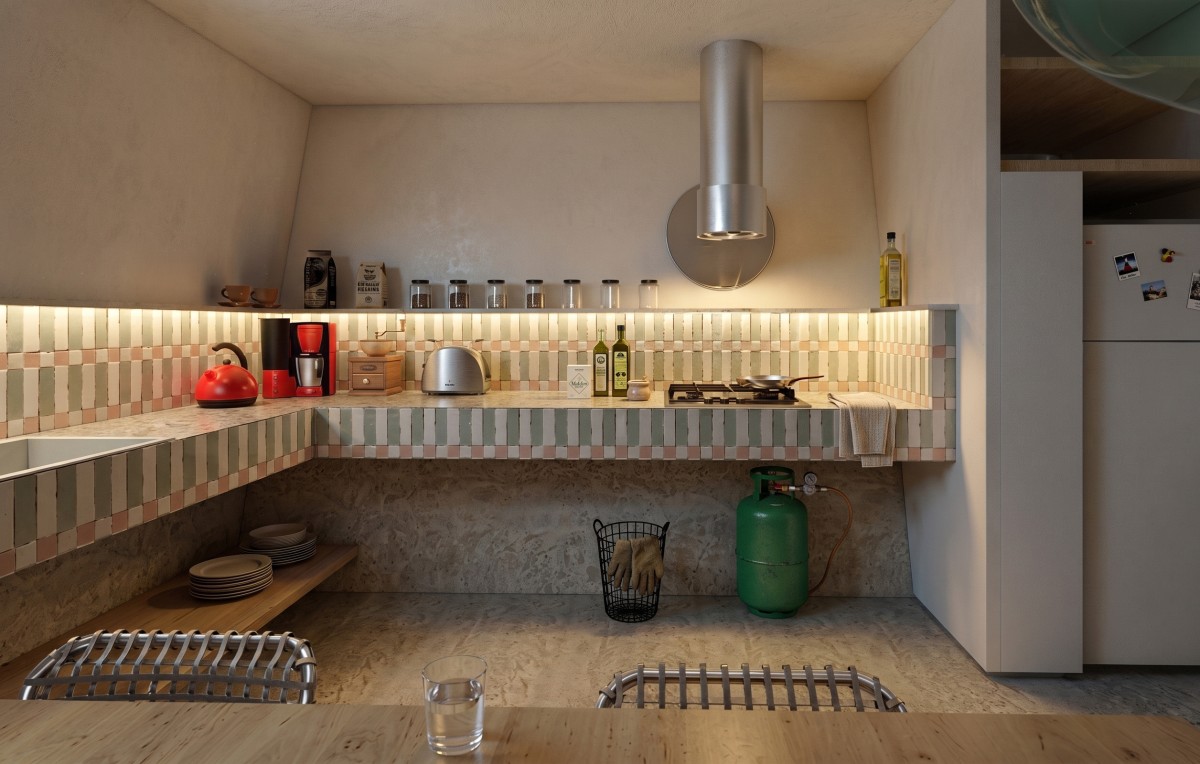
An industrial-brutalist language of raw concrete, timber and metal forms the strong structural backdrop of the house. Against this restrained material palette, unexpected colours, sculptural furniture and playful decorative details introduce warmth, humour and personality. Here, Brutalism is not austere; it becomes a backdrop for life.
A cross-cultural dwelling
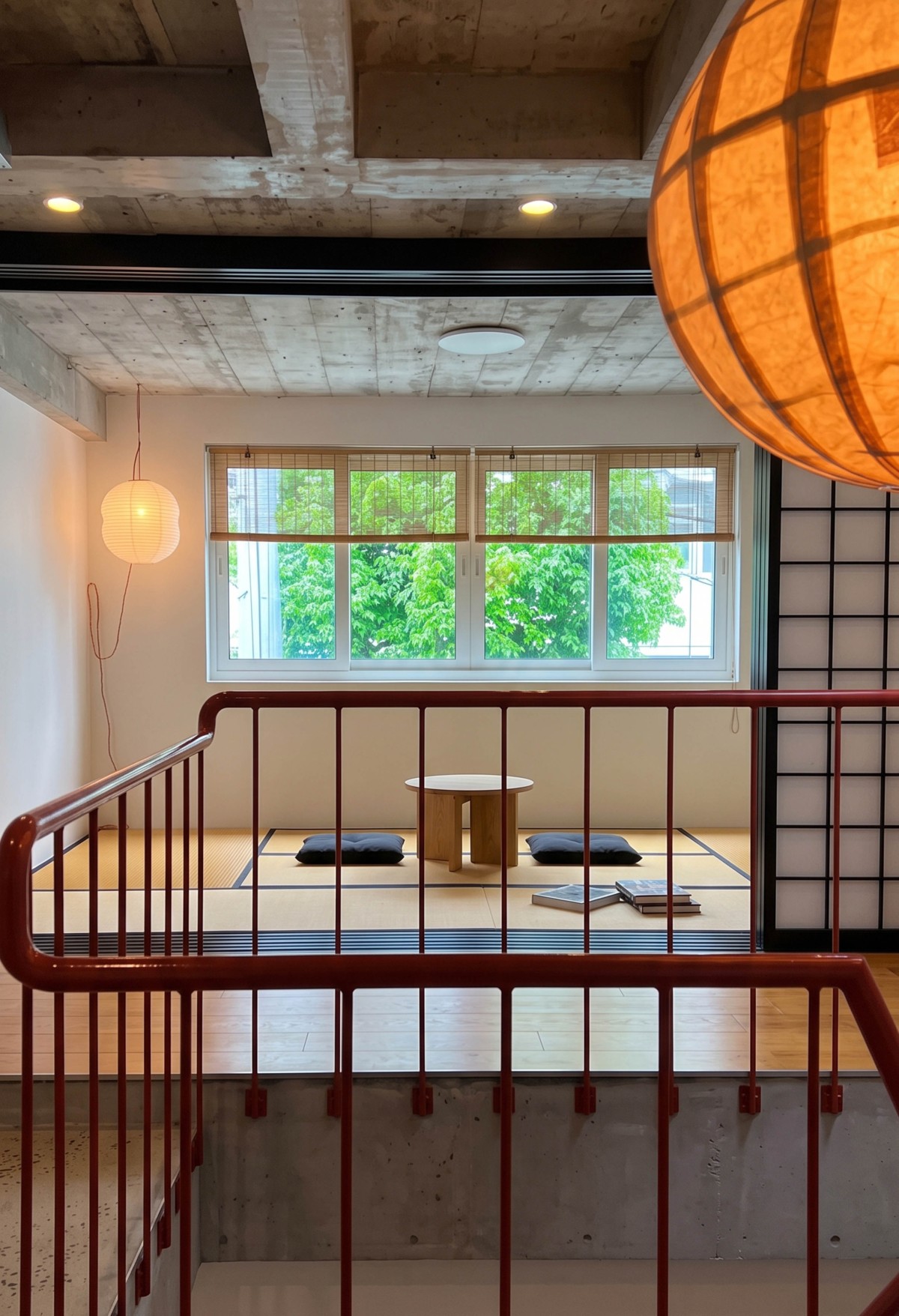
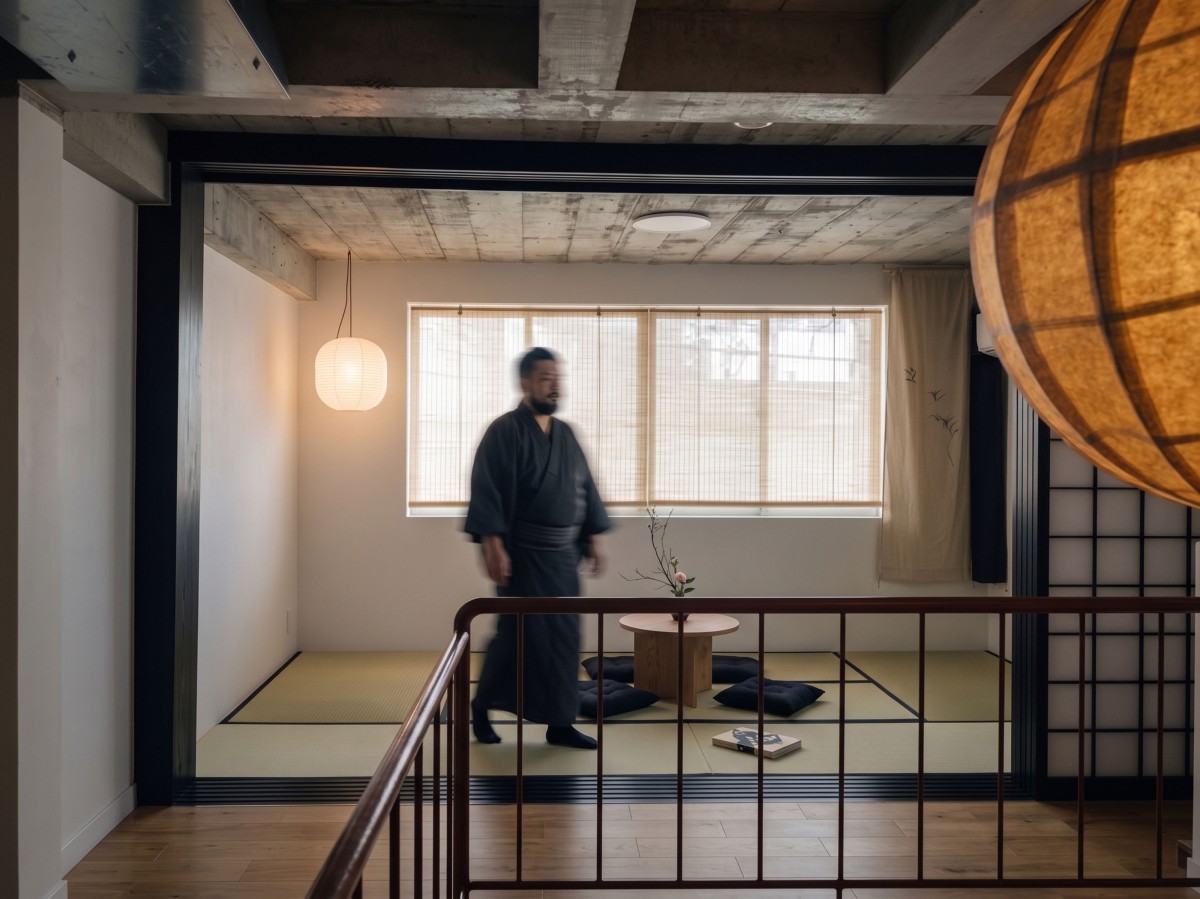
Japanese references are not treated as decorative motifs, but embedded into the spatial logic of the house. Tatami, shoji screens, sliding doors and the notion of ma - the meaningful void between things, are reinterpreted through a contemporary architectural language.
The restraint, proportions and flexibility of traditional Japanese architecture are placed within a distinctly modern context of concrete, sound, light and everyday objects. Culture is therefore not something applied onto the architecture; it becomes a way of inhabiting space.
Designing beyond the human
The two cats are considered true inhabitants of the house. Rather than adding pet furniture as an afterthought, their needs are integrated into the interior from the very beginning: discreet locations for litter boxes, built-in resting niches, climbing surfaces and dedicated routes of movement.
Architecture, in this sense, is no longer designed solely for humans. It becomes a small domestic ecosystem, where people, animals, music, light and materials share the same living environment.